
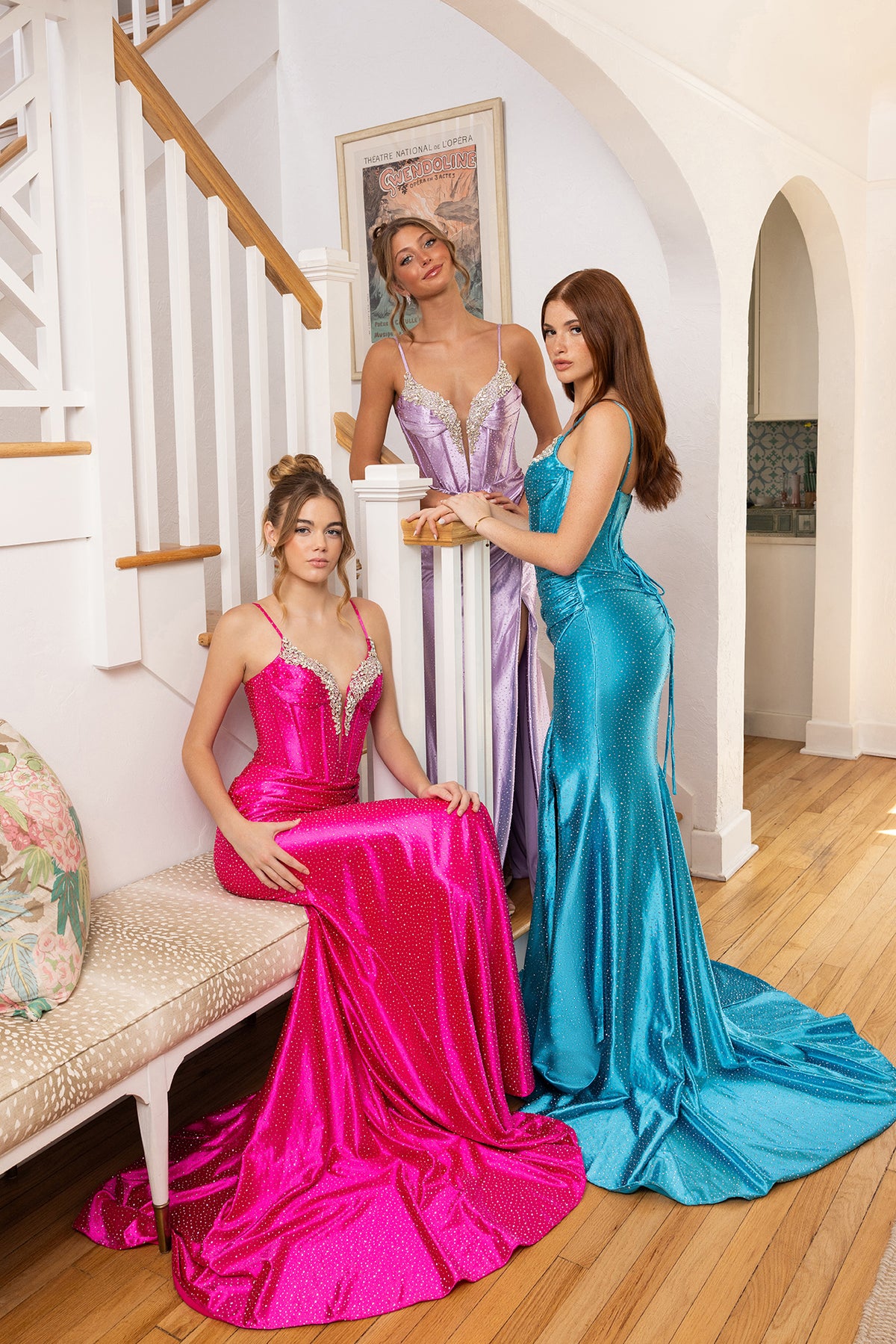

How to Communicate a Dress Code to Your Attendees
By the time you send out your invitations, you know your theme, colors, and what you want to wear. But your guests may need a little guidance about how to dress for your event. Learn how to communicate a dress code to your attendees.
Put It on the Invitation
The simplest way to tell your guests what they’re expected to wear is to put a dress code in the invitation. There is a time-honored glossary of dress-code wording short enough to include on invitations, or on a card inserted with the invitation. If you have created a website for your event, include information about the dress code.
Time of Day Is a Big Hint
Guests will be confused if you specify black tie for a morning or afternoon event. Traditional gentlemen’s formal attire for the morning is—you guessed it—a morning coat. This is a gray cutaway coat worn with a vest and tie. Dapper gents add a top hat. Ladies wear tea-length or longer dressy daytime frocks.
Tuxedos, cocktail dresses, and floor-length gowns are for events after 6 p.m.
Use the Correct Dress Code Wording
Social dress conventions define several categories of appropriate attire for events, and several of them refer to ties. Gentlemen know what to wear if the invitation states “white tie,” “black tie,” or “black tie optional.” Ladies take their cue from the level of formality the “tie” code defines.
“White tie” is the most formal category. Gentlemen wear white tie and tails, while ladies will wear long, formal gowns. White tie is rare, used for only the fanciest ball or diplomatic event.
“Black tie” refers to a tuxedo. It’s still very formal, but a little less strict than white tie. Ladies still may prefer long evening gowns, but classy boutique style cocktail dresses are permissible.
The next notch down in formality is “black tie optional.” Gentlemen can show off their tuxes after 6 p.m. if they want to, but they can also choose to wear a dark business suit. Ladies have a bit more flexibility with dressy separates or cocktail or short evening dresses.
Beyond these well-known categories things can get looser and more confusing. “Casual” can be beach casual, business casual, dressy casual, chic casual, or sporty casual. Be kind to your guests about what you mean by “casual” or “semiformal,” or you risk guests showing up in attire that doesn’t come close to what you had in mind.
A formal event requires a formal, printed invitation. A more casual or just-for-fun gathering might deploy an invitation app that communicates via mobile device. Whatever means you use to communicate a dress code to your attendees, clarity is key. Effie’s boutique has the selection and variety of formal wear to ensure your guests can find something appropriate and lovely to wear to your event. Schedule a fitting with us today!


